Leadership is PURPOSEFUL
Welcome to Karoo’s 24th Leadership Weekly Note of 2023.
This week we cover the sixth behavioural attribute, namely being PURPOSEFUL.
I have two responses.
Firstly, let us compare and contrast what purposeful is, and is not.
The two-column table below contrasts typical purposeful behaviours with their inverse.
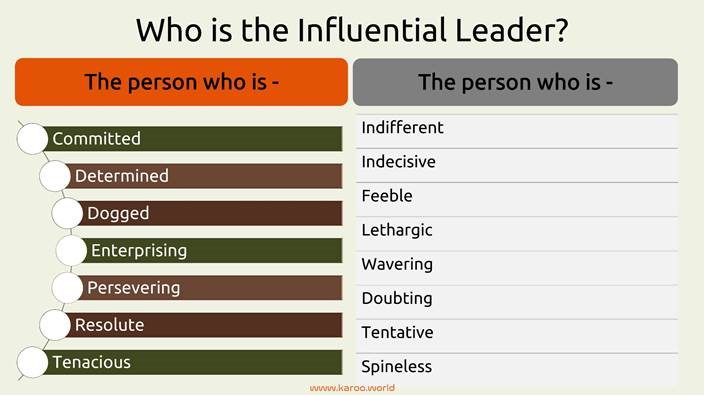
The left-hand column is the winner for leadership, and for life.
The right-hand column, however, does a fantastic job of reflecting why there is a leadership gap wherever we look.
My second response is a story about Thomas Edison, the chap who is regarded as the inventor of the light bulb. Those who have completed Alpha will recall this story from Module 8. If you care to get the full story, take the Alpha journey.
I am not in a position to declare that Thomas A. Edison (1847–1931), one of the most prolific American innovators and inventors of things technological, was in any manner an influential leader, but his inventing process has profound lessons for the leadership behaviour of being purposeful.
Edison held the world record of 1,093 patents. As he matured, he was able to focus on the kinds of innovations that could be commercialised, i.e., those inventions that would make money for him and his investors. This approach helped him to develop further inventions with ongoing investment backing.
The key lesson for our behavioural attribute is not his ever-expanding portfolio of great and grand achievements, but his initial and ongoing ‘fallings’. It is Edison’s stamina and purposefulness that overcame every apparent falling (not failing). A misstep was always a learning for him, a way of getting closer to the solution.
Erica Hendry, in her article, 7 Epic Fails Brought to You By the Genius Mind of Thomas Edison, puts it this way:[i]
‘Almost everyone can name the man that invented the light bulb.
Thomas Edison was one of the most successful innovators in American history. He was the “Wizard of Menlo Park,” a larger-than-life hero who seemed almost magical for the way he snatched ideas from thin air.
But the man also stumbled, sometimes tremendously. In response to a question about his missteps, Edison once said,
“I have not failed 10,000 times – I’ve successfully found 10,000 ways that will not work.”
‘That’s part of the problem with understanding Edison – you have to look at what he does and what other people are saying around him, because he doesn’t spend a lot of time writing about what he’s doing – he’s so busy doing it,’ DeGraaf explains. ‘I think he has impatience with that sort of navel gazing.’
There are six ‘being purposeful’ lessons from Hendry’s observations:
-
- Edison did not ‘snatch ideas out of thin air’—he worked at them, after thinking carefully about what society needed and would pay for.
- He stumbled but learned as he stumbled.
- He did not give up. He found another way.
- He got busy. He did things to learn.
- He was relentless.
- He fell, not failed.
When you examine the contrasting adjectives for what being purposeful is (or not), you will appreciate why influential leaders must have this attribute in the behaviour repertoire, every time they face a leadership moment.
So, no matter what you face this week—whether great fortune or adversity—be purposeful, it is the only way to succeed!
In the influential leadership language, we say just #keeP_pedallinG!
Regards,
Colin Donian
CEO: Karoo
Leadership is PURPOSEFUL!
[i] Hendry, Erica R. 7 Epic Fails Brought to You By the Genius Mind of Thomas Edison. Despite popular belief, the inventor wasn’t the “Wiz” of everything. 13 November 2013. Smithsonian Magazine. https://www.smithsonianmag.com/innovation/7-epic-fails-brought-to-you-by-the-genius-mind-of-thomas-edison-180947786/. Accessed on 22 March 2022.
Leadership Weekly Note: 2423. 120623
e: colind@karoo.world
Follow The Karoo Influential Leadership on Facebook at https://www.facebook.com/KarooInfluentialLeadership


